
"coffee plant harvest"
10000 article(s) found

A brief introduction to the treatment method of grinding degree and baking degree of spicy and unrestrained Kenyan boutique coffee beans
Large coffee processing farms in Kenya usually have independent processing facilities. A large number of small farmers usually pick ripe coffee fruits by hand. Coffee picking is a labor-intensive job that requires the whole family to deploy and even hire workers during the harvest season. The fresh fruits of the picked coffee need to be promptly transported to the cooperative-owned coffee processing plant for pulping and transportation.

A brief introduction to the cultivation of spicy and unrestrained boutique coffee beans in Kenya, geographical location, climate and altitude
Coffee cultivation in Kenya is mainly divided into two types: large farms (Estate) and cooperatives (Cooperatives). The former generally has a large planting area and has independent coffee processing facilities. Most coffee production is done by a large number of small farmers, who form coffee cooperatives. The Coffee Cooperative Society hired special managers to supervise the coffee handling of its members.

A brief introduction to the Market Price of Fine Coffee Bean varieties in Kenya
Like the choice of other coffee producing countries, although SL-28 and SL-34 have stood the test of time and cultivated generation after generation of faithful pumps for Kenyan coffee, the Kenyan government and the Coffee Research Institute (Coffee Research Foundation) have begun to promote a new variety, Ruiri 11, for the sake of coffee yield and disease resistance.

Planting conditions and Regional Distribution of Coffee trees species of Coffee trees planting altitude
Professional coffee knowledge exchange more coffee bean information Please pay attention to the coffee workshop (Wechat official account cafe_style) Coffee planting and geographical distribution climate is the decisive factor in coffee cultivation, coffee trees are only suitable for growing in the tropics or subtropics, so the zone between 25 degrees south and north latitude is generally called coffee belt or coffee area. However, not all the land located in this area

A brief introduction to the flavor and aroma characteristics of Kenyan boutique coffee beans
Coffee cultivation in Kenya is mainly divided into two types: large farms (Estate) and cooperatives (Cooperatives). The former generally has a large planting area and has independent coffee processing facilities. Most coffee production is done by a large number of small farmers, who form coffee cooperatives. The Coffee Cooperative Society hired special managers to supervise the coffee handling of its members.

A brief introduction to the flavor, taste and aroma characteristics of delicious Kenyan boutique coffee beans
Almost all Kenyan coffee is sold through the coffee exchange in Nairobi, the capital. Coffee auctions are held at coffee exchanges every Tuesday during the harvest season. Traders with trading qualifications will get raw bean samples in advance, and after the cup test, they will choose the raw beans they like. In the following auction, the highest bidder will get. The coffee auction system in Kenya is considered

A brief introduction to the Origin, Development, History and Culture of delicious Kenyan Fine Coffee beans
Almost all Kenyan coffee is sold through the coffee exchange in Nairobi, the capital. Coffee auctions are held at coffee exchanges every Tuesday during the harvest season. Traders with trading qualifications will get raw bean samples in advance, and after the cup test, they will choose the raw beans they like. In the following auction, the highest bidder will get. The coffee auction system in Kenya is considered

A brief introduction to the cultivation of delicious Kenyan boutique coffee beans, geographical location, climate and altitude
Like the choice of other coffee producing countries, although SL-28 and SL-34 have stood the test of time and cultivated generation after generation of faithful pumps for Kenyan coffee, the Kenyan government and the Coffee Research Institute (Coffee Research Foundation) have begun to promote a new variety, Ruiri 11, for the sake of coffee yield and disease resistance.

Introduction to the flavor characteristics of red bourbon washed Rwandan coffee in Karen Gracia treatment plant, Rwanda
Professional coffee knowledge exchange more coffee bean information please follow the coffee workshop (Wechat official account cafe_style) Rwanda Karen Gracia processing plant red bourbon washing RwandaKarengera Cyiya Washing StationRed Bourbon Washed land Kirimbi farmers in Nyamasheke region of western Rwanda province harvest from the local about 661 small

The production of coffee, the planting technology of coffee manor.
Arabica coffee and Robbite coffee are harvested once every 3 to 4 years, and their lifespan varies due to different production conditions and different degrees of care (usually 20 to 30 years, after which they have to be replanted). Both varieties need plenty of sunlight and moisture. Arabian coffee trees like the seasonal climate of 15-24 ℃; Robbins like warm.

A brief introduction to the treatment method of grinding degree and baking degree of glossy Kenyan boutique coffee beans
Bourbon Bourbon was first brought to Kenya for planting. In the 1950s, the then agricultural research institution Scott Laboratory selected two excellent hybrids, SL-28 and SL-34, through unremitting efforts, subverting the long-standing prejudice of artificial breeding without excellent natural varieties. SL-28 and SL-34 helped Kenyan Coffee form its own unique

A brief introduction to the Origin, Development, History and Culture of Fruit-flavored Kenyan Fine Coffee beans
Mainly by large farms (Estate) and cooperatives (Cooperatives) two types. The former generally has a large planting area and has independent coffee processing facilities. Most coffee production is done by a large number of small farmers, who form coffee cooperatives. The coffee cooperative society employs special managers to supervise the coffee handling process of its members, even fine enough.
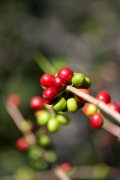
Picking coffee beans planting coffee beans in imported coffee producing areas
Most Arabica coffee beans mature from June to August and Roberts coffee beans from September to October. Therefore, although in some countries where the dry and wet seasons are not obvious, such as Colombia and Kenya, there are two flowering periods a year, that is, two harvests, strictly speaking, only once a year. Of course, the harvest time varies from region to region. South of the equator, such as Brazil

Kirimbi Kailengra-West Asia Processing Plant Information, Nyamasheke Region, Western Province of Rwanda Coffee
Professional coffee knowledge exchange More coffee bean information Please pay attention to coffee workshop (Weixin Official Accounts cafe_style) ◎ Introduction: Rwanda coffee-Kerengra-West Asia processing plant is located in the southwest of Rwanda, not far from the green hills on the south bank of Lake Kivu. It was founded in 2006, and although the treatment plant is at an altitude of 1800 meters, the harvested coffee even spans up to 20 meters.

Coffee harvesting and screening how coffee fruits become coffee beans
The work to be done in a coffee plantation is much more than planting and harvesting. Coffee fruits are picked almost immediately when they are ripe, and it is not easy to judge the fruits of a tree at different ripening stages. In most Arabica coffee growing areas, ripe coffee cherries must be carefully picked by hand and placed in the picker's basket, and its weight determines the picker.

Introduction to the treatment method of planting and developing History of single Bean Flavor description in Kenya
For the exchange of professional baristas, please follow the coffee workshop (Wechat official account cafe_style) Kenya Kenyan population: 44353000 Central Kenya produces the most coffee beans, of which the highest quality coffee beans also come from the central producing areas. At present, western Kenya is also interested in growing coffee, such as Kisi Kisii, Trans-Enzoya Trans-Nzoia, Keiba Keiyo, Malagua M.

A brief introduction to the treatment method of grinding degree and baking degree of fruit-flavored Kenyan fine coffee beans
Bourbon Bourbon was first brought to Kenya for planting. In the 1950s, the then agricultural research institution Scott Laboratory selected two excellent hybrids, SL-28 and SL-34, through unremitting efforts, subverting the long-standing prejudice of artificial breeding without excellent natural varieties. SL-28 and SL-34 helped Kenyan Coffee form its own unique

Planting, harvesting, treatment, drying, grinding, export, cup testing, baking, grinding, cooking
Planting growing coffee beans is actually a kind of seed. When dried, roasted and ground, it can be used to make coffee. If the seeds are not processed, they can be planted and germinated into coffee trees. Coffee seeds are usually planted in big beds in shaded nurseries. Always water the seedlings and block the bright light until they thrive. Planting is often carried out in the rainy season

A brief introduction to the treatment method of grinding degree and baking degree of Kenyan boutique coffee beans with rich taste
Coffee cultivation in Kenya is mainly divided into two types: large farms (Estate) and cooperatives (Cooperatives). The former generally has a large planting area and has independent coffee processing facilities. Most coffee production is done by a large number of small farmers, who form coffee cooperatives. The Coffee Cooperative Society hired special managers to supervise the coffee handling of its members.

Introduction to the planting environment of varieties with taste treatment method for the grindability characteristics of coffee in the Manor Ireta, Panama
The Candela volcano area produces a lot of food for Panama, as well as excellent coffee. This area borders on Costa Rica. Altitude: 1200-1600m harvest time: December-March planting varieties: Tibica, Kaddura, Kaduai, Bourbon, Rosa, another producing area of San Ramon Renacimiento Chirqui province, connected with Costa Rica